

 🇪🇺

Your experienced B2B fulfillment service provider from the Allgäu
If your customers are retailers and not end consumers, your B2B fulfillment follows its own rules. Orders are placed in batches instead of individual items, delivered to loading ramps instead of front doors, and billed via delivery notes instead of package inserts. Futura Marketing has been working as a B2B fulfillment service provider for manufacturers, brands, and wholesalers since 1993 and knows these requirements from over 30 years of practical experience.
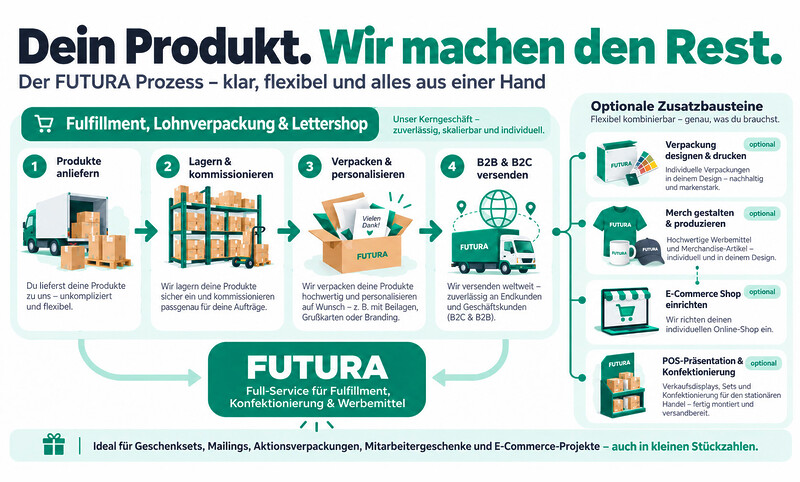
The range of services extends from warehousing and picking to supplying central warehouses, branches, and resellers. For Futura, fulfillment for business customers means that commercial and end-customer orders can run in parallel through the same warehouse. If you operate a shop with business customers, B2B e-commerce fulfillment also covers this channel, including integration with your shop system.
No one requires fixed minimum volumes. B2B fulfillment solutions in Kisslegg start with small batches for individual buyers and grow to framework agreements with ongoing supply. Your existing ERP system remains in use, and Futura adapts to it.
Request your individual B2B fulfillment from us now:


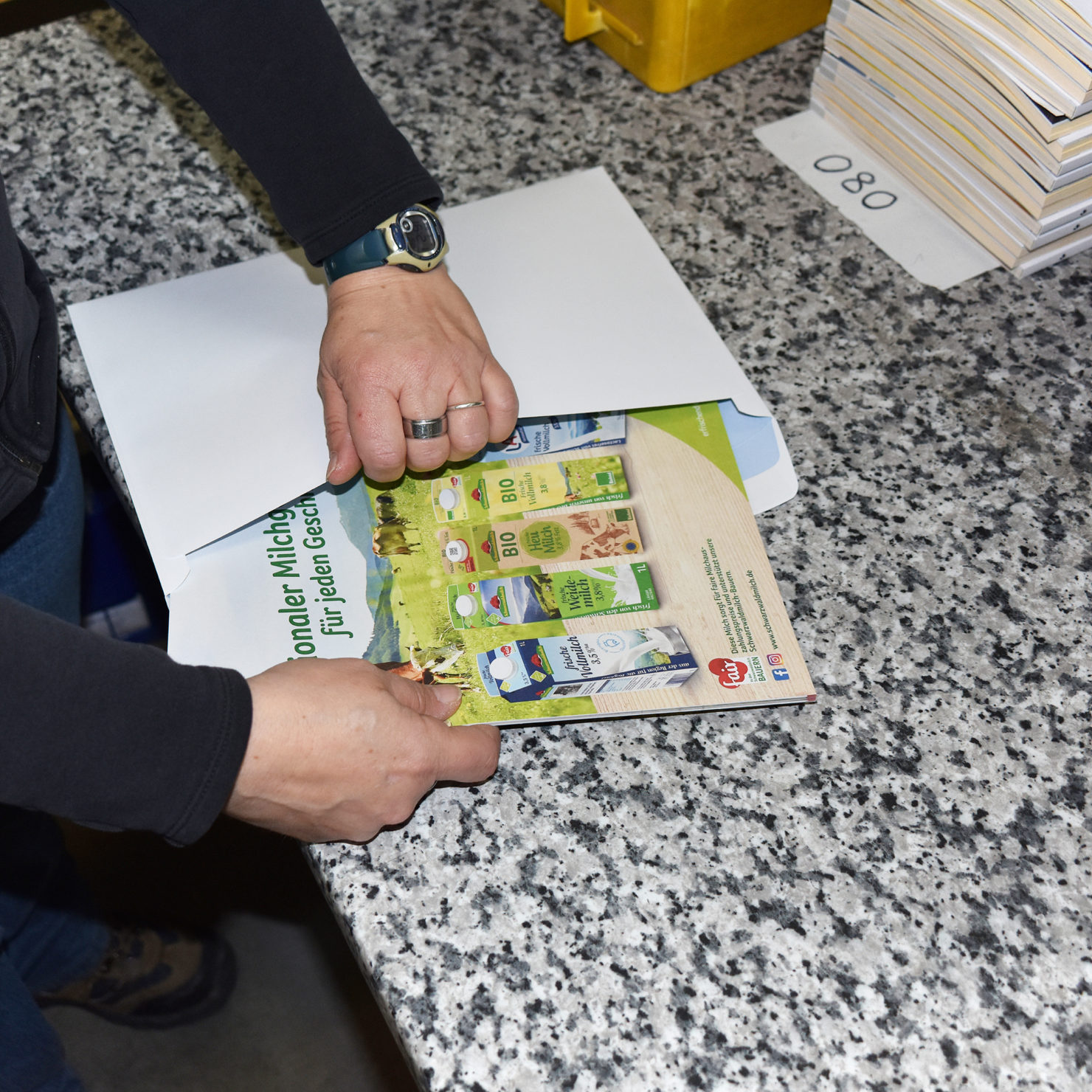
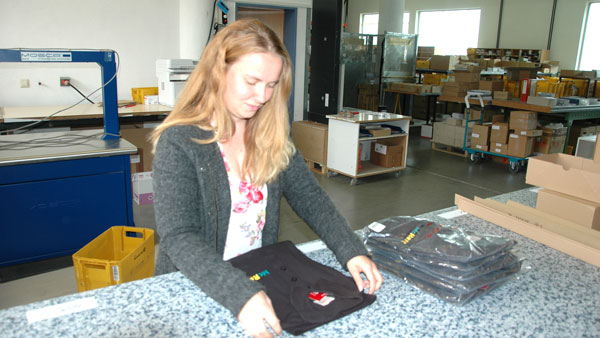


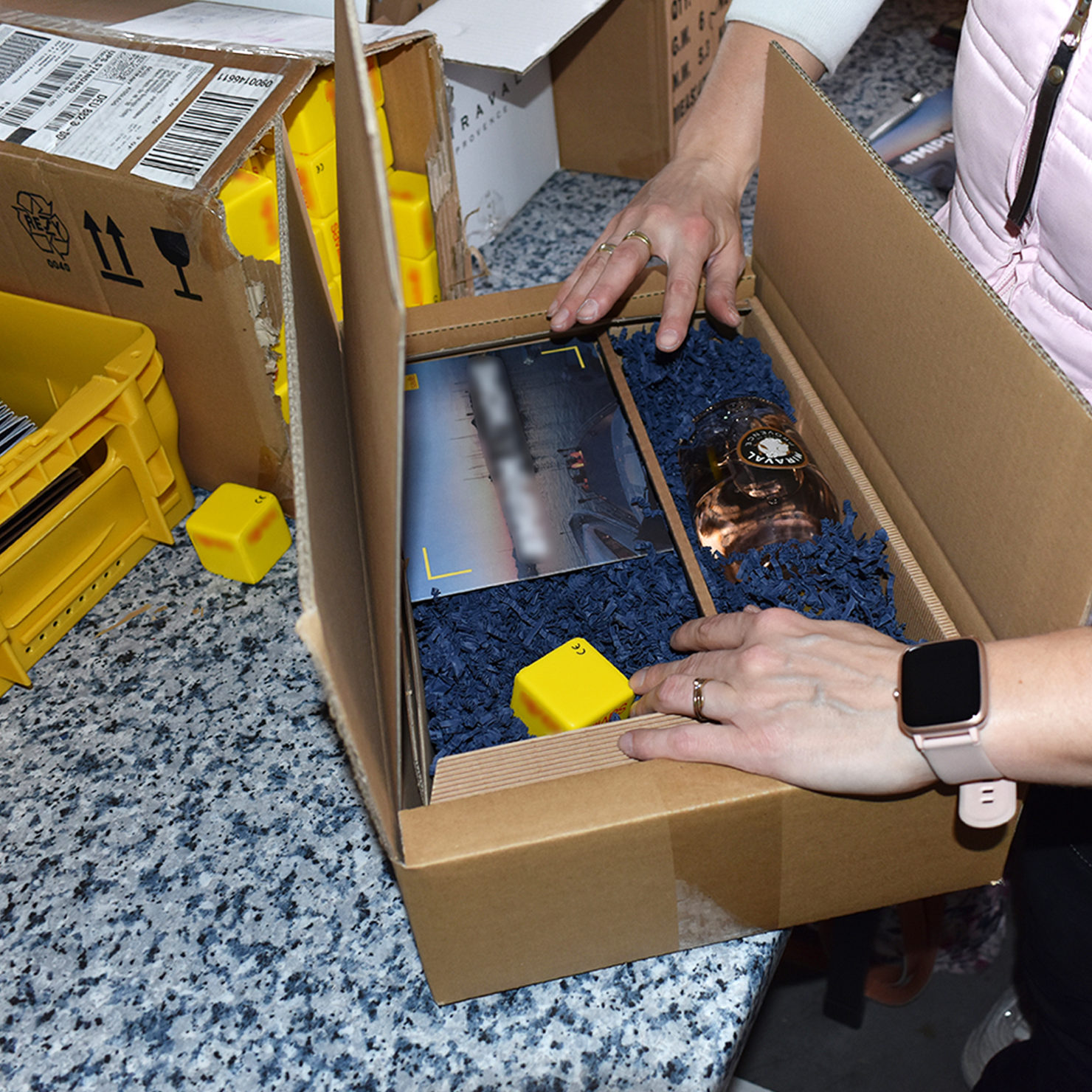


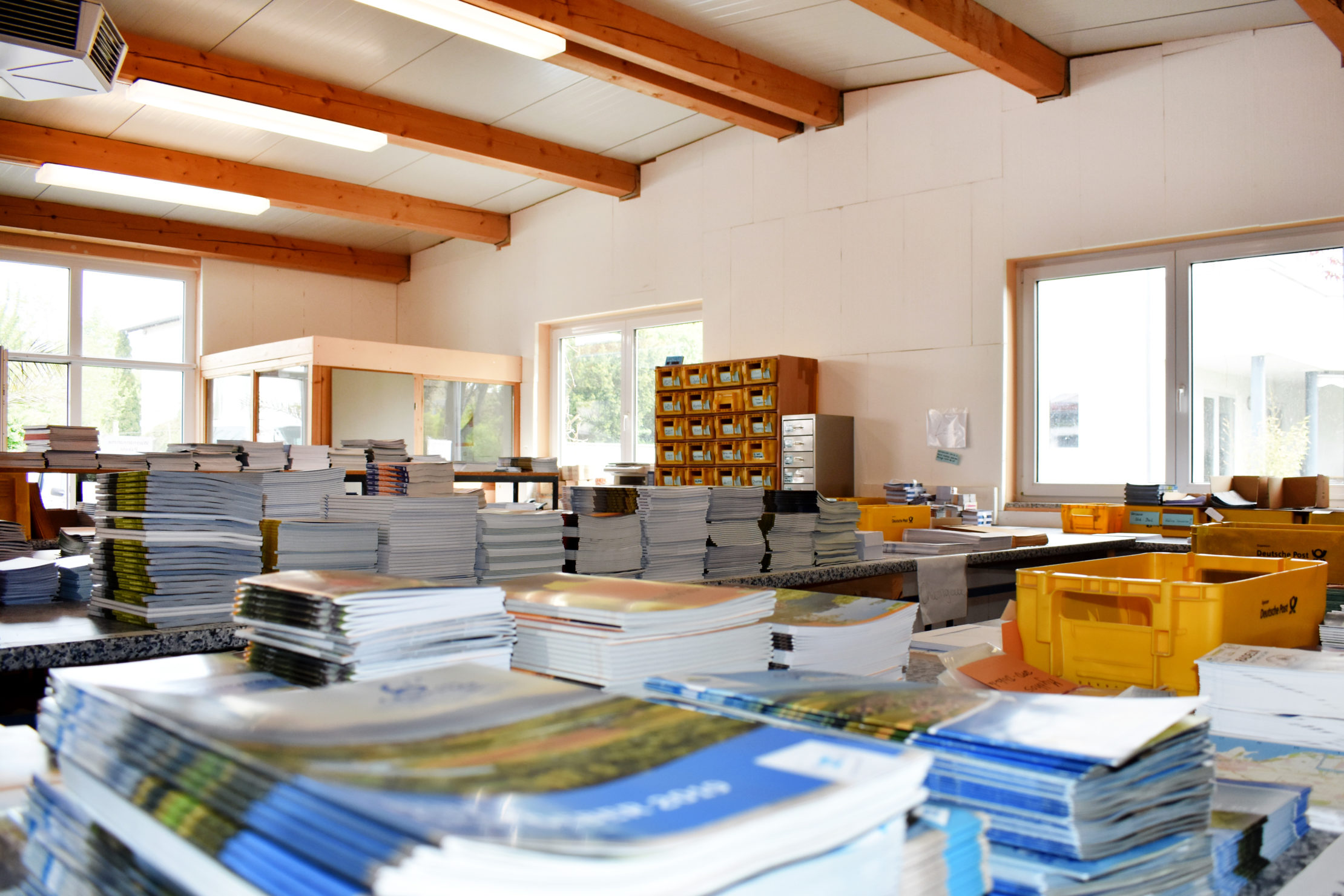


B2B order processing with delivery note, advance shipping notice and time slot
Trade customers check not only the goods but also the processing. B2B order processing therefore includes correct delivery notes, timely advance notification and compliance with the delivery time slots specified by retail headquarters. Anyone who misses the time slot at the loading dock pays waiting fees or returns without completing the delivery. Does that sound like a formality? It is precisely such details that cause supply relationships to fail. Futura incorporates the requirements of each retail headquarters into the order data and plans routes accordingly. If a buyer changes its guidelines, the B2B fulfillment is adjusted without you having to intervene.
Orders reach the warehouse via order list, interface or directly from your ERP. Then Futura’s shipping and logistics kick in: palletized goods go by freight forwarder, smaller shipments go as parcels. International deliveries including customs documents are part of everyday business. Shipment data and proof of delivery are reported back to you for each order so that your sales team can provide information immediately when the buyer has questions.
Pick large volumes and deliver on schedule
One hundred cartons for a single buyer require different processes than one hundred parcels to one hundred addresses. In fulfillment for wholesale, the team picks by product type onto pallets, secures the load and places the goods ready for dispatch at the loading dock. Counting and checking are carried out according to the company’s zero-error standard before any shipment leaves the warehouse.
Mixed structures are also everyday business. Fulfillment for retailers serves the small specialist retailer with two cartons just as much as the chain that supplies 80 locations simultaneously. For each recipient, exactly the shipment size is created that its ordering behavior requires, from individual parcel to full pallet.
On-time delivery remains the hard currency here. Agreed delivery dates are planned backwards, bottlenecks are reported early. This keeps your B2B fulfillment predictable even during peak periods.
This is how B2B fulfillment differs from B2C shipping
Many providers come from end-customer shipping and transfer its logic to business customers. That rarely works well, because the requirements differ in almost every process step. The comparison shows the most important differences:
| Criterion | B2B Fulfillment | B2C Shipping |
|---|---|---|
| Recipient | Retailers, branches, central warehouse | End consumers |
| Shipment size | Tiers, cartons, pallets | Individual parcels |
| Accompanying documents | Delivery note, advance shipping notice, collective invoice | Invoice in the parcel |
| Delivery | Loading dock with time slot | Front door, parcel locker |
| Returns | Complaints for entire batches | Individual returns |
Both worlds are not mutually exclusive. For the end-customer channel, Futura operates its own e-commerce fulfillment, while fulfillment for B2B companies is at home on this page. Anyone serving both channels combines them via a shared inventory. This saves duplicate storage space. At the same time, B2B fulfillment retains its own rules for paperwork, routes, and time windows.
Scalable capacities for seasonal peaks and growth
Business customer orders fluctuate with trade fairs, listings, and seasonal business. Futura’s contract logistics absorbs such peaks because space and personnel grow flexibly alongside them. If you are planning a listing with a large chain, for example, call-offs rise abruptly. Futura then reserves additional space before the wave rolls in. More than 3,000 sqm of heated warehouse space provides the foundation for this, and inventory data is available as of the current day.
And what happens when a batch comes back? Returns management accepts complaints, inspects the goods, and reports the results back in a structured manner. This turns returns back into sellable inventory instead of silent write-offs.
The first step remains. Send a brief description of your product structure, your buyers, and the monthly volumes. That is all that is needed to get started. As a B2B fulfillment provider with dedicated contacts, Futura will get back to you with a concrete proposal including terms and conditions. Launch often succeeds within just a few weeks.